













April 23 – 25, 2026 | bUm, Berlin, Germany
Since 2012, WEROBOT has been hosted by leading institutions such as Yale, Stanford, Ottawa, Seattle, Miami, Boston and Windsor (CA). In April RAILS e.V. brings WeRobot 2026 for its first full European edition to Berlin.bu
An international platform to discuss current and future AI and robotics policy.
We bring together scientists, policymakers, business leaders, and the broader expert community to discuss shared strategies for managing the rapid advancements in robotics and AI.


We Robot is an interdisciplinary, peer-reviewed conference that brings together leading scholars and practitioners to discuss legal, ethical and policy implications of robots and other emergent digital technologies. Since its inception in 2012, the conference has fostered dynamic conversations regarding robot theory, design, ethics and development. We Robot has been hosted in Yale, Stanford, Ottawa, Seattle, Miami, Boston and Windsor (CA)in the past.

Recognized as one of North America’s most exciting interdisciplinary conferences on the societal implications of robotics, We Robot is now expanding to Europe, marking a significant step toward international collaboration and practical solidarity in the academic world. We Robot 2026 in Berlin wants to encourage the exchange of diverse perspectives and academic insights from all around the world. It wants to discuss pathways towards a responsible, accessible and trustworthy use of technology for the common good.
We Robot 2026 will create an international platform to discuss current and future AI and robotics policy, especially at a time when legal frameworks are evolving in different directions around the world. A major focus of the 2026 edition will be a comparative analysis of different approaches to regulation, with the goal of fostering mutual learning and dialogue.
The conference seeks to bring together scientists, policymakers, business leaders, and the broader expert community to discuss shared strategies for managing the rapid advancements in robotics and AI.


Experience top-level interdisciplinary exchange. Our conference offers a platform to present and discuss the latest findings, advancing your research and science as a whole.
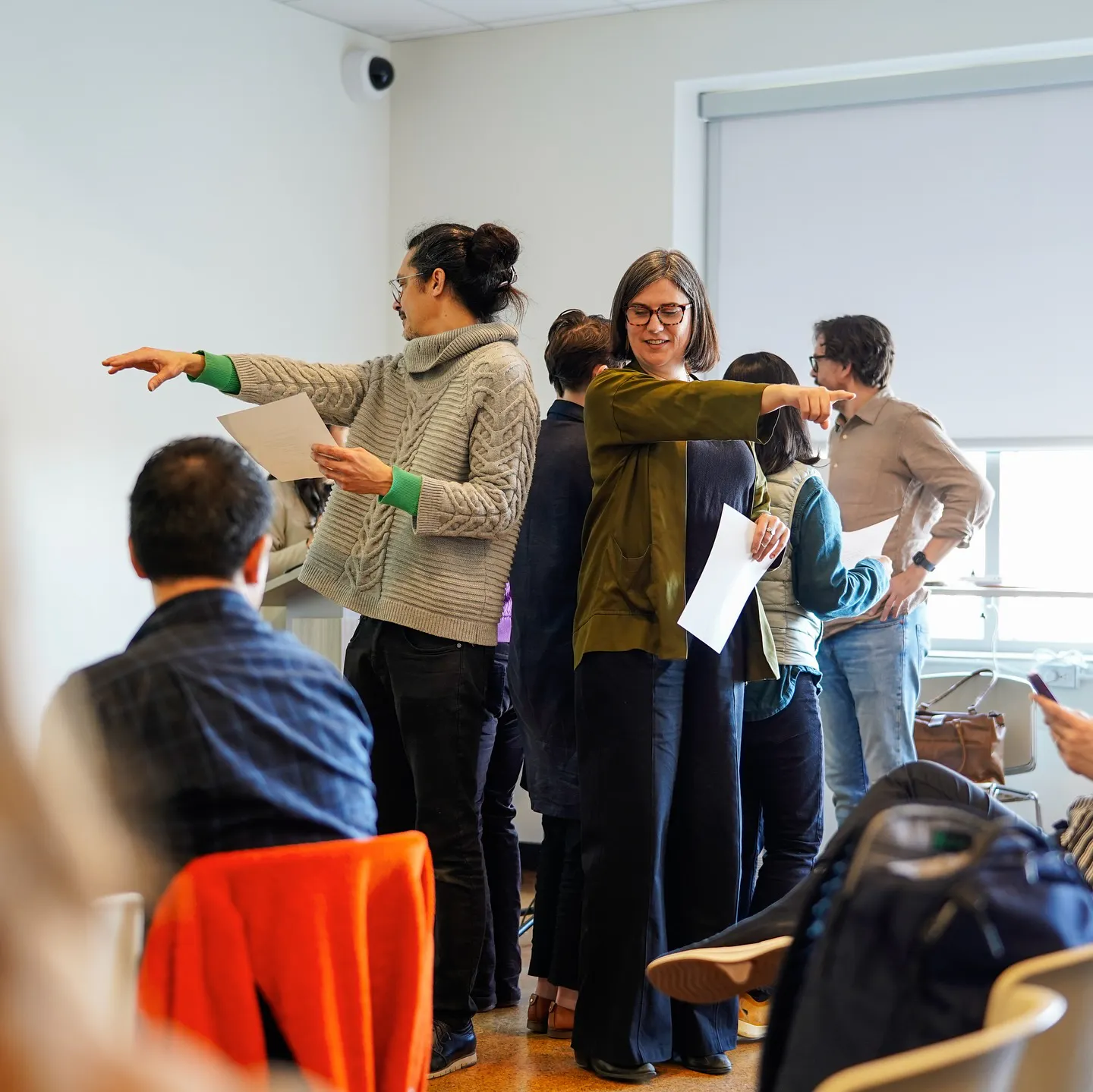
Seize the chance to build valuable connections! Network with scientists, experts, and industry leaders, and expand your professional network for future collaborations.
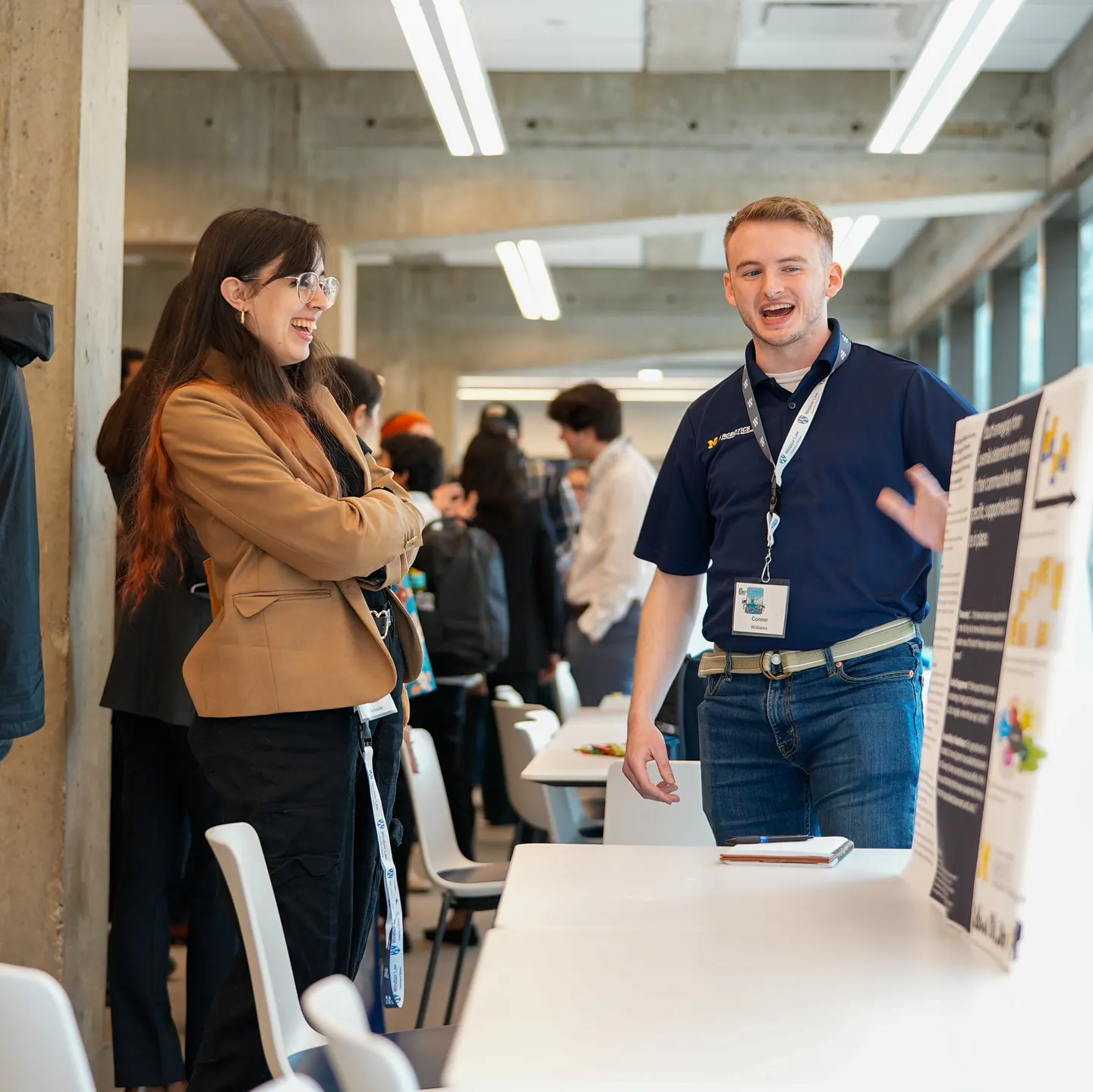
Immerse yourself in the latest technologies! Enjoy exciting demos and events showcasing innovations firsthand, and be inspired by new technical solutions.
As debates on AI, digital sovereignty, and fair value intensify, WeRobot returns to Berlin, April 23–25, 2026.
We explore how Europe can shape its own path in robotics and AI–learning from global approaches while turning challenges into opportunities. The conference brings together academia, policymakers, business, and experts to foster innovation with social responsibility.

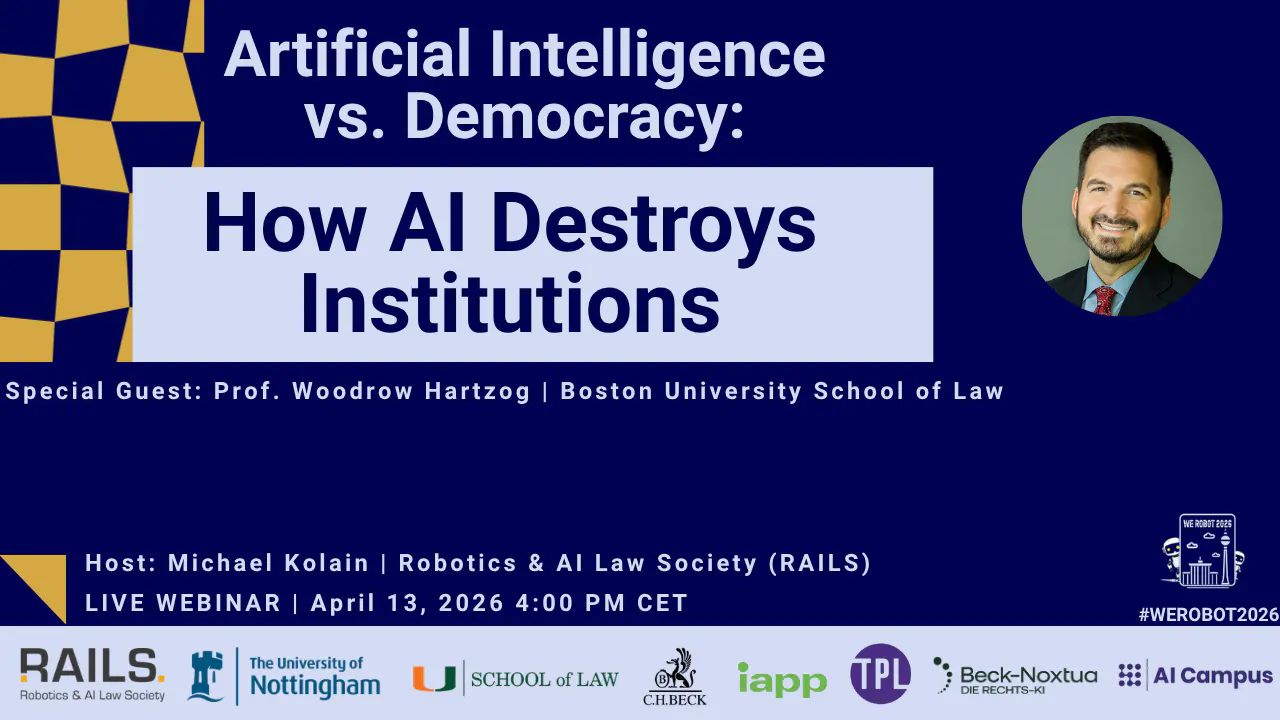
What if AI isn't just a tool - but a structural threat to democracy itself?
That's the argument Prof. Woodrow H. (Boston University School of Law) makes in his new paper, and we're sitting down with him to dig into it.
Artificial Intelligence vs. Democracy: How AI Destroys Institutions
🗓 April 13 | 10:00 AM EST | 4:00 PM CET
💻 Webinar via Zoom
AI is often sold as a tool for efficiency. But what if its very design is incompatible with the institutions that hold democratic life together?
In their new paper published in the UC Law Journal, Prof. Woodrow Hartzog and Prof. Jessica Silbey argue that AI systems, by their nature erode expertise, short-circuit decision-making, and isolate people from one another. The result, they contend, is a slow but accelerating destruction of the civic institutions we rely on: the rule of law, universities, journalism, and democratic governance.
In this webinar, RAILS host Michael Kolain sits down with Prof. Hartzog to unpack the argument, explore what it means for law and policy, and ask what, if anything, can be done.
We will discuss around:
- Why AI's core affordances are structurally at odds with institutional legitimacy
- How AI is already degrading legal systems, higher education, and the free press
- What meaningful regulation might actually look like
- The road ahead for AI governance in Europe and beyond
This event is part of our ongoing series leading up to We Robot 2026, the 14th annual interdisciplinary conference on robotics and AI, coming to Berlin for the first time on April 23-25, 2026.
Special thanks to Kristen Thomasen (Conference Advisor)
HOSTING ORGANISATION
Join our network of innovative organizations and help shape the future of robotics and AI.